


November is American Diabetes Month. A time where, across the country, communities team up to bring awareness to this powerful disease.
from Health & Lifestyle https://ift.tt/oLHrq57




Go to Blogger edit html and find these sentences.Now replace these sentences with your own descriptions.This theme is Bloggerized by Lasantha Bandara - Premiumbloggertemplates.com.

Go to Blogger edit html and find these sentences.Now replace these sentences with your own descriptions.This theme is Bloggerized by Lasantha Bandara - Premiumbloggertemplates.com.

Go to Blogger edit html and find these sentences.Now replace these sentences with your own descriptions.This theme is Bloggerized by Lasantha Bandara - Premiumbloggertemplates.com.

Go to Blogger edit html and find these sentences.Now replace these sentences with your own descriptions.This theme is Bloggerized by Lasantha Bandara - Premiumbloggertemplates.com.

Go to Blogger edit html and find these sentences.Now replace these sentences with your own descriptions.This theme is Bloggerized by Lasantha Bandara - Premiumbloggertemplates.com.
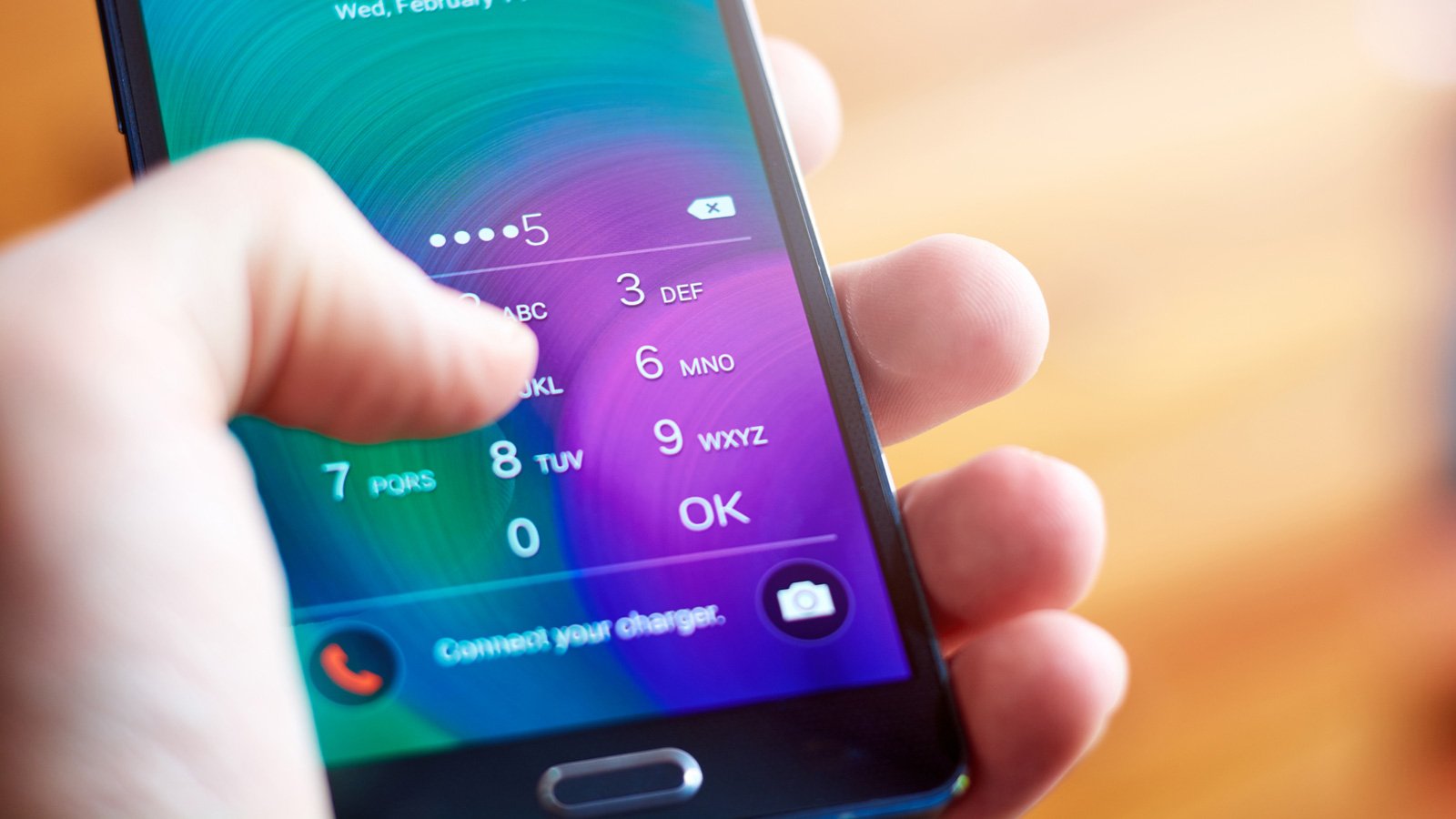
Cybersecurity researcher David Schütz accidentally found a way to bypass the lock screen on his fully patched Google Pixel 6 and Pixel 5 smartphones, enabling anyone with physical access to the device to unlock it.
Exploiting the vulnerability to bypass the lock screen on Android phones is a simple five-step process that wouldn't take more than a few minutes.
Google has fixed the security issue on the latest Android update released last week, but it has remained available for exploitation for at least six months.
Schütz says he discovered the flaw by accident after his Pixel 6 ran out of battery, entered his PIN wrong three times, and recovered the locked SIM card using the PUK (Personal Unblocking Key) code.
To his surprise, after unlocking the SIM and selecting a new PIN, the device didn't ask for the lock screen password but only requested a fingerprint scan.
Android devices always request a lock screen password or pattern upon reboot for security reasons, so going straight to fingerprint unlock wasn't normal.
The researcher continued experimenting, and when he tried reproducing the flaw without rebooting the device, he figured it was possible to go straight to the home screen (bypass fingerprint too), as long as the device had been unlocked by the owner at least once since reboot.
[embed]https://www.youtube.com/watch?v=dSgSnYPgzT0[/embed]
The impact of this security vulnerability is quite broad, affecting all devices running Android versions 10, 11, 12, and 13 that haven't updated to November 2022 patch level.
Physical access to a device is a strong prerequisite. However, the flaw still carries severe implications for people with abusive spouses, those under law enforcement investigations, owners of stolen devices, etc.
The attacker can simply use their own SIM card on the target device, enter the wrong PIN three times, provide the PUK number, and access the victim's device without restrictions.
The issue is caused by the keyguard being wrongfully dismissed after a SIM PUK unlock due to a conflict in the dismiss calls impacting the stack of security screens that run under the dialog.
When Schütz entered the correct PUK number, a “dismiss” function was called twice, once by a background component that monitors the SIM state, and once by the PUK component.
This caused not only the PUK security screen to be dismissed but also the next security screen in the stack, which is the keyguard, followed by whatever screen was next queued in the stack.
If there's no other security screen, the user would directly access the home screen.
Schütz reported the flaw to Google in June 2022, and although the tech giant acknowledged the reception and assigned a CVE ID of CVE-2022-20465, they didn’t release a fix until November 7, 2022.
Google’s solution is to include a new parameter for the security method used in every “dismiss” call so that the calls dismiss specific types of security screens and not just the next one in the stack.
In the end, although Schütz's report was a duplicate, Google made an exception and awarded the researcher $70,000 for his finding.
Users of Android 10, 11, 12, and 13 can patch this flaw by applying the November 7, 2022, security update.
11/14/22 - Post updated for better clarity on the flaw exploitation procedure
The Fitbit Sense 2 is the flagship Fitbit watch for 2022. It takes the health-tracking obsession of the original Fitbit Sense, improves stress-tracking flexibility, and adds a physical button instead of a finicky pressure-sensitive spot on the side.
It’s an improvement, but the Sense 2 also feels like a downgrade from the best Fitbit in some important ways. Third-party app support has been removed, meaning you could argue this is no longer a real smartwatch. And in this move, the Fitbit Sense 2 loses any form of music support — no playback, no control of what’s played on your phone.
It leaves the Fitbit Sense 2 without as clear a sense of direction as we’d like. However, it’s still a good fit for passive, casual health and fitness tracking, and for those who have a lighter workout routine, where somewhat patchy heart rate accuracy won’t be a deal-breaker.
However, as the most recent flagship Fitbit, you will be able to grab one at discount in the Black Friday Fitbit deals, increasing the value of the total package.
The Fitbit Sense 2 is the top-end Fitbit watch. Now Google owns Fitbit, it effectively slots in above the Versa 4, below the Google Pixel Watch.
You’ll pay up to $299.95/£269.99/$447AU for the watch, its launch price. Fitbit released the Sense 2 in September 2022, two years after the original Sense.
If you are already familiar with the Fitbit Sense series and are hoping for something new-looking in the Sense 2, we have bad news. The two generations of watches have similar looks, and the big design change is as much a mea culpa as anything else.
Fitbit has added a physical button to the Sense 2. All those complaints about the annoying touch panel on the original paid off. The Sense 2 design isn’t super-fresh, then, but the look has only noticeably aged in one dimension. Apple’s Watch Series 8 has a super-slim bezel, while the Fitbit Sense 2 a big ole’ chunky one, just like the original.
However, this isn’t obvious all the time, just in certain lighting conditions that highlight where the screen ends, because the Sense 2 display is an OLED panel. It’s the ideal tech for a smartwatch because emissive pixels let unlit parts of the screen sink into the background.
Materials are the same as the original too. The Fitbit Sense 2 has a lightly domed glass face, one much more square-shaped than most. Its sides are aluminum and much of the back is plastic.
We’ve used a whole bunch of smartwatches recently, including the Pixel Watch, Apple Watch Series 8 and Garmin Epix 2. The Fitbit Sense 2 has the least sharp display of the bunch, but you’ll only notice if you look unusually close, to see the slight fuzziness to text. It’s otherwise bright and colourful, and has an always-on mode worth trying if you’re happy with two-to-three days of battery life rather than six.
The Fitbit Sense 2 is absolutely a watch you can wear more-or-less 24 too. It’s light, and 5ATM water resistance means it’s happy enough in the shower or swimming pool.

So far, so original Fitbit Sense. However, the Fitbit OS interface has been given a revamp in the Sense 2, and it brings the layout much closer to that of the Pixel Watch. This makes sense when you consider Google now owns Fitbit, and these watches have to find a way to live in harmony — or at least as much as family members tend to. The change is actually a positive one as well.
You flick left and right from the watch face to see your daily stat screens. There’s a sum up of the day’s stats, a graph of your heart rate over the day, a weather report, and a few other bits — Fitbit staples. You flick up from the watch face to see notifications, which look great on the Sense’s good-size screen. And a press of the side button takes you to the Sense 2’s take on an apps menu. This holds some of the stuff you can access in those stat screens, plus some smarter extras.
However, one of the key takeaways of our weeks using the Sense 2 is how much less of a smartwatch the Fitbit Sense 2 seems today than top-end Fitbits did a few years ago. The company has discontinued support for third-party apps. Fitbit hasn’t had a good app scene for quite a while now, but at least the original Fitbit Sense had a Spotify app. That’s gone.
The Fitbit Sense 2 is, for now at least, limited to what you get fresh out of the box. In smart feature terms the mean wireless payments through Fitbit Pay and smart assistant support via Amazon Alexa. This may sound bizarre when Google has Assistant, and Google has a better-supported wireless payments service called Google Wallet (+Pay). Google is reportedly flinging this to Sense 2s as we write this, but it has not reached our Sense just yet, and Alexa support is limited too.
The Fitbit Sense 2 has a speaker, so you do get that full voice assistant experience of asking for something, and hearing a disembodied voice replying complete with some on-watch visual feedback. But Alexa only works when connected to your phone because the Sense 2 has no Wi-Fi. Or, to be more precise, it has no active Wi-Fi as the watch apparently does have the capability but Wi-Fi is disabled in the software.
More important than any of this, the Sense 2 also lacks any kind of music support. You can’t store music on the watch, Spotify support has been discontinued and you can’t even control the music played on a connected phone.
No third-party apps, no Wi-Fi, no music — the Sense 2 isn’t much of a smartwatch. It skims the surface of this category, offering notifications and wireless payments but little more. What separated the Sense line from the cheaper Charge 5 has largely been lost.
Fitbit handles this shift badly too because you can still browse through the apps you can’t download on the Fitbit app on your phone. Some new stuff is coming, though. Google Maps support is on the way, offering turn-by-turn navigation while connected to your phone.
The Fitbit Sense 2 is not a great smartwatch, but it does have the series’s staple health bent. This means it has an ECG sensor and the company’s electrodermal activity sensor, or EDA. ECG looks at your heart rhythm for signs of atrial fibrillation. You have to put your thumb and forefinger to the bezel and wait for 30 seconds, but it’s a neat piece of tech. Our only issue is that it won’t work if your resting heart rate is below 50. Ours occasionally heads down to 47-48bpm, but that’s not exactly normal so Fitbit gets a pass here.
Fitbit also fills in for the fact active participation is required by offering high and low heart rate notifications. If the watch spots something odd, you’ll get an alert and may take this as a prompt to fire up the Sense 2 ECG. The original Sense had a similar issue with its stress-tracking EDA sensor. It tracks stress by analysing your sweat production, but in the old model you had to sit there with your hand over the screen, so your palm was laid over the sensors.
Now you only have to do that if you want to, because the Fitbit Sense 2 can also use a rear sensor to watch out for “body response” events that may indicate stress. It’s not going to work as well, of course. Sweaty palms are a thing, but sweaty-upper-wrist-bit? Less so. When one of these responses is noticed, your watch will ask how you’re feeling and log it in the Fitbit app. It’s not that exciting unless you’re really into this particular brand of wellness tracking.
Stress and heart health sensors aside, the Sense 2 is otherwise matched by the Fitbit Versa 4. It has full GPS, an optical heart rate reader that can also record blood oxygenation stats, and there’s an altimeter to count the flights of stairs you climb each day. This is the full package, but we don’t find certain elements of the Fitbit Sense 2’s stat accuracy all that good. The GPS side is perfectly solid, apart from taking quite a while to lock on when tracking in a completely new location or after several days of non-use.
While the Sense 2 does not have Multi-Band GPS like some of the high-end Garmins or an Apple Watch Ultra, it was able to hold onto signal throughout all our outdoors tracked workouts. Heart rate accuracy is a different story, though, as the Sense 2’s readings were a mess for the first few minutes of tracking each time. We’ve been trying out some longer, lower heart rate sessions of late, and the Sense 2 typically records a far too high rate for the first 4-5 minutes before finally settling into the groove and doing an all-around better job.
Curiously, this issue was far more severe than what we saw in the Fitbit Versa 4, which tended to overshoot the rate of exertion spikes before re-aligning its readings with reality fairly swiftly. The Fitbit Sense 2 may well have had a software update that improves matters by the time you read this, but we’d still very much trust an Apple Watch SE or Garmin Forerunner 255 over this watch. And while its “40-plus” exercise modes may sound impressive, we found too many of them to be generic or vanilla, with only the programmable HIIT interval mode offering something a bit beyond the basics.
The Fitbit Sense 2 is stronger when viewed as an all-round holistic health watch than a dedicated fitness one. To get the most from it, though, you need to sign up to Fitbit’s Premium service. This is a $9.99/£9.99 a month exercise and wellness subscription that unlocks video workouts, guided meditations and nutrition plans. You can consider it an alternative to Apple’s Fitness+, although it doesn’t show watch stats on-screen, one of the neatest Fitness+ characteristics.
A bunch of stats are also only unlocked to Premium members. These include the entire “insights” section, which shows long-term trends in recorded stats, Training Readiness, sleep restlessness and snoring. The Fitbit Sense 2 does enough to seem, and be, useful without these extras. A subscription is not all-but mandatory. But having the reminder in the app that the watch’s full strength is only unlocked with a paid subscription may be frustrating for some.

A Fitbit Sense 2 has some issues, but it still has one great big advantage over the rival Apple Watch SE: battery life. Despite looking and running like a smartwatch (at least until you go looking for more advanced smartwatch features), it lasts much longer than one.
Fitbit says the Sense 2 will last six days between charges. We saw it last around five days, but real-world stamina is going to vary depending on, for example, how much you use the GPS. Tracking a run for an hour typically takes 10% off the charge level, a rate far higher than when it counts steps passively, as you’d expect.
When you get to the point of charging your watch once a week rather than once a day, wearable battery annoyances all but disappear. However, if you use the Sense 2’s always-on display mode you can expect the battery to roughly halve, leaving you with somewhere around 2.5-3 days between charges.
